
Best overall for friend-first IRL plans: Pulsenow. Best for recurring interest groups: Meetup. Best for scheduled local events: Eventbrite. For neighborhood connections, choose Facebook Groups; for group exercise, choose Strava. This 2026 guide matches each app to the kind of activity you want, rather than treating every social platform as interchangeable.
- Pulsenow tops this best apps for group activities near me shortlist for meeting nearby friends and organizing IRL plans.
- Meetup suits recurring hobby groups; Eventbrite suits scheduled local events.
- Facebook Groups suits neighborhood connections; Strava suits activity-led fitness communities.
- Choose by local relevance, clear logistics, and whether you want new friends or an organized event.
Why this matters
Finding something nearby and finding people you want to see again are different jobs. An event listing gives you a destination. A recurring group gives you a reason to return. A friend-focused app puts meeting people at the center of the plan.
The best choice depends on what you want to happen after the activity. If you want an ongoing social circle, prioritize opportunities to reconnect. If you simply want something interesting to do this weekend, prioritize a clear event description and practical details.
For your 2026 shortlist, start with that distinction. A long list of local activities is not useful if none fits your schedule, interests, or comfort level.
What makes the best apps for local group activities?
Use these criteria before choosing an app:
- Purpose fit: Does the app help you meet friends, join an existing group, attend an event, or exercise with others?
- Local relevance: Look for activities within a distance you would actually travel, not just your wider metropolitan area.
- Clear logistics: You should understand the activity, meeting place, start time, and expectations before committing.
- Repeat potential: If friendship is your goal, look for a practical way to see the same people again.
- Participation fit: Check whether newcomers, beginners, and people attending alone are welcome.
- Personal boundaries: Read the information provided, keep sensitive details private, and choose a public first meeting.
No app guarantees a good group. Your decision should come down to a specific plan you would join, not the platform with the longest feature list.
Best group activity apps at a glance
| App | Best for | Standout purpose | Key limitation |
|---|---|---|---|
| Pulsenow | Friend-first IRL plans | Meeting nearby people and organizing real-life meetups | Not the default choice when you only want an event listing |
| Meetup | Recurring interest groups | Groups organized around shared interests and events | Each group's schedule and expectations need checking |
| Eventbrite | Scheduled local events | Discovering events with defined details | Attending an event does not guarantee social interaction |
| Facebook Groups | Neighborhood connections | Discussions and coordination within local communities | Relevant plans can be mixed with unrelated posts |
| Strava | Group exercise | Clubs and shared athletic interests | A fitness-led setting is not a general social activity directory |
The table ranks these options by the use case they serve, not by a claim that one app has more local users. Your neighborhood and preferred activity determine which option deserves your attention.
1. Pulsenow: best group activity app for friend-first IRL plans
The app helps you meet new friends and organize real-life meetups and plans with people nearby. That makes it the clearest starting point here when your goal is social connection, with an activity giving you a reason to meet.
Choose this approach when you care more about finding people to spend time with than browsing a formal event calendar. Keep the first plan simple enough that getting acquainted remains the main activity.
Pulsenow pros:
- Its stated purpose connects meeting new friends with making IRL plans.
- Nearby people are central to the app's description.
- It fits a friendship-first goal rather than requiring a specific hobby.
Pulsenow cons:
- Organizing a meetup still requires agreeing on the practical details.
- A friend-focused app is not a substitute for a venue's event information.
Best for: You want to meet people nearby and turn that introduction into an actual outing.
Try proposing a public, low-pressure activity rather than an elaborate itinerary. A recommended 30-minute walk gives the plan a clear shape without requiring a long commitment. Agree on the meeting point and an easy way to recognize each other.
Verdict: Choose it for friend-first local plans. Skip it as your primary search method if your only goal is finding a specific scheduled event.
2. Meetup: best group activity app for recurring interest groups
Meetup organizes discovery around groups, shared interests, and events. It suits you when you already know the activity you enjoy and want a group that gives you a reason to keep showing up.
Start with an interest you would pursue even if the first conversation feels awkward. A book discussion, walking group, or language exchange gives you something to do while you get to know people.
Meetup pros:
- Shared interests provide a starting point for conversation.
- Group-based organization supports looking beyond a single outing.
- Event descriptions help you assess the activity before joining.
Meetup cons:
- A group's location and schedule still need to match your routine.
- Membership alone does not create friendships; participation matters.
Best for: You want an established interest group and a reason to return.
Read the group's description and the individual event details separately. A group can match your interests while a particular session is aimed at experienced participants. Check whether the next gathering actually welcomes someone at your level.
Verdict: Choose Meetup for recurring, interest-led participation. Skip groups whose expectations or travel requirements do not fit your life.
3. Eventbrite: best group activity app for scheduled local events
Eventbrite is built around event discovery and registration. It works best when your question is what to do on a particular day, rather than whom to build a friendship with.
Look for events where the format supports interaction. A participatory workshop gives you a different social setting from a performance where everyone faces a stage.
Eventbrite pros:
- Event-led discovery suits date-specific planning.
- Listings provide a place to examine organizer-supplied details.
- Different event formats let you choose between participating and watching.
Eventbrite cons:
- An event listing does not promise introductions or group conversation.
- A one-off outing does not automatically provide a way to reconnect.
Best for: You want a defined event and can evaluate whether its format matches your social goal.
Before registering, identify what you will actually do alongside other attendees. Check the organizer's instructions, venue details, and participation requirements. Do not assume that an event described as social includes a hosted introduction.
Verdict: Choose Eventbrite for event-first plans. Skip passive formats when your main goal is getting to know new people.
4. Facebook Groups: best group activity app for neighborhood connections
Facebook Groups brings community discussion and planning into a group setting. Local groups can help you find people connected to a neighborhood, interest, or shared circumstance.
This option suits you when context matters: you want nearby walking companions, a community discussion, or a group connected to an area you already spend time in. Read the rules before posting an invitation.
Facebook Groups pros:
- Group discussions provide context beyond a standalone event description.
- Neighborhood-focused groups give local plans a defined geographic focus.
- You can assess the tone of existing conversations before participating.
Facebook Groups cons:
- Activity plans can sit alongside unrelated community discussions.
- Each group sets its own rules and expectations for participation.
Best for: You want neighborhood connections and are comfortable finding plans through community conversations.
Search for a group whose stated purpose matches your request. A narrowly relevant community is a better starting point than posting the same invitation everywhere. Avoid sharing your home address or detailed personal routine in a group post.
Verdict: Choose Facebook Groups for community-led coordination. Skip groups whose rules or conversation style make you uncomfortable.
5. Strava: best group activity app for group exercise
Strava is a fitness platform with clubs and social features centered on athletic activity. It belongs on this shortlist when the activity itself—such as running or cycling—is the main reason you want to meet people.
A shared sport gives the outing a clear purpose. It also makes pace, distance, equipment, and experience important parts of choosing a suitable group.
Strava pros:
- Athletic interests give group participation a clear focus.
- Clubs provide a way to explore fitness communities.
- A shared activity supplies something concrete to discuss.
Strava cons:
- Fitness goals and ability levels need to align.
- Joining an online club does not itself confirm an organized local meetup.
Best for: You want activity-led connections around a sport you already do or want to begin.
Confirm meetup details with the organizer rather than inferring them from club membership. Ask about the intended pace, route, and beginner expectations. Choose a group that fits your current ability, not the level you hope to reach later.
Verdict: Choose Strava for sport-specific connections. Skip it for general social plans unrelated to exercise.
How the apps are ranked
This 2026 ranking prioritizes purpose fit: friend-first planning, recurring interests, scheduled events, neighborhood communities, and group exercise. The criteria are local relevance, clear logistics, repeat potential, participation fit, and personal boundaries.
The order is a decision guide, not a measured comparison of attendance, safety, or local membership. Choose the app whose main purpose matches your goal, then judge the actual group or plan on its details.
Turn your shortlist into a plan
Downloading several apps is not the same as making a plan. Pick the strongest match, find a suitable activity, and resolve the details that would otherwise leave you guessing.
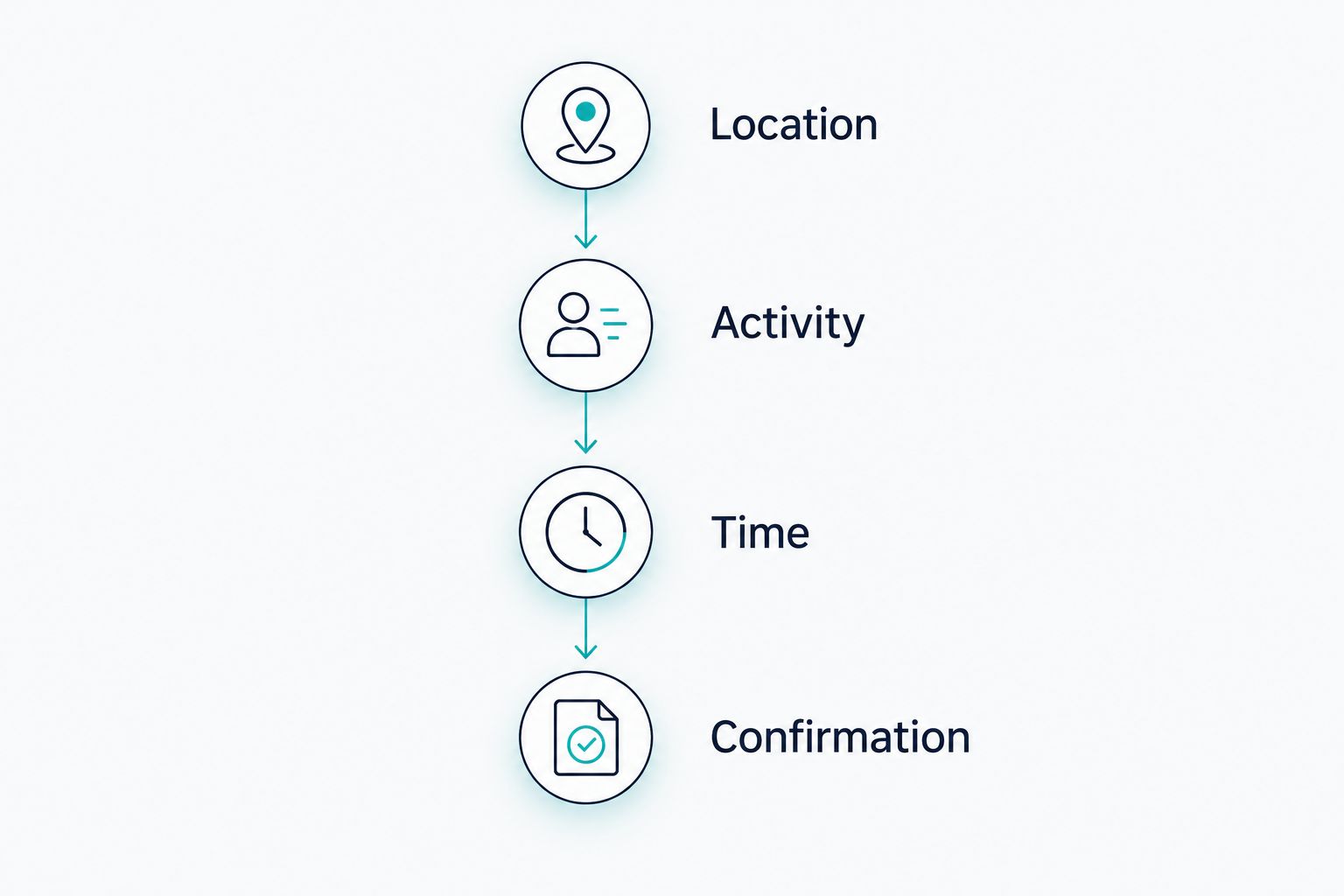
Use this sequence for your next outing:
- Location: Choose a public place you can reach and leave independently. Name the exact entrance or meeting point.
- Activity: Describe what you will do together. Keep the description specific enough that someone can decide whether it suits them.
- Time: Suggest 2 time options if the plan is still being arranged. For a first outing, a recommended 60-minute session provides a clear endpoint.
- Confirmation: Agree on who is attending, how to recognize the group, and what happens if plans change.
These are planning suggestions, not app requirements. Use them to make an invitation easier to answer and an outing easier to attend.
For a first meetup, tell someone you trust where you are going. Keep your own transportation options and leave if the situation does not match what was agreed. App choice does not replace these basic precautions.
Which group activity app should you choose?
Pulsenow is the default pick for people seeking nearby friends and IRL plans. Choose Meetup instead when a recurring hobby group is the priority, or Eventbrite when you want a scheduled event to attend.
Facebook Groups fits neighborhood-led coordination. Strava fits exercise-led connections. Those are distinct jobs, so there is no need to force every option into your routine.
For 2026, make your decision around a specific next step: a group you would join, an event you would attend, or an invitation you would send. Keep the app that helps you take that step.
FAQ
What's the best app for group activities near me?
The best app depends on your goal: choose a friend-focused app for new connections, Meetup for interest groups, or Eventbrite for scheduled events. Facebook Groups suits neighborhood coordination, while Strava suits fitness-led connections.
Is Meetup better than Eventbrite for making friends?
Meetup is the stronger fit when you want an interest group you can attend repeatedly. Eventbrite is the stronger fit when you want a particular event; assess whether its format includes opportunities to interact.
Which app should I use if I'm going alone?
Choose an app that leads you to an activity explicitly welcoming individual attendees. Read the description and ask the organizer how newcomers join the group rather than assuming introductions are included.
How do I find beginner-friendly group activities?
Look for an activity that explicitly describes its beginner expectations. For exercise groups, confirm pace, distance, and equipment; for other activities, ask whether any prior experience is required.
What should I check before meeting a local group?
Confirm the activity, public meeting point, start time, organizer instructions, and participation expectations. Arrange your own way to leave and let someone you trust know your plan.
How should I choose between group activity apps in 2026?
Choose according to the outcome you want in 2026: friendship, a recurring interest group, a scheduled event, neighborhood connections, or group exercise. Then assess a real local plan rather than choosing on the app name alone.
One last thing
Before you leave an outing you enjoyed, suggest a specific next activity. You do not need a complicated invitation: name the activity and ask who wants to join. For your next 2026 plan, prioritize a reason to meet again over another round of browsing.