
Best overall for LGBTQ+ friendship: Lex. Best for nearby IRL plans: Pulsenow. Best for organized group activities: Meetup. Best for online communities: Discord. This 2026 guide compares the best LGBTQ apps to make friends by community focus, conversation style, and how you want to spend time together.
- Lex is the best default for LGBTQ+ friendship when you want a queer-centered, text-led community.
- Pulsenow is best for friendship seekers who want nearby connections and IRL plans.
- Meetup suits organized group activities; Discord suits ongoing conversations around shared interests.
- Choose a specific community, state your friendship intentions, and keep first meetings public.
Why this matters
An LGBTQ+ audience and a friendship-first experience are different things. You need both a community where you feel comfortable and a way to connect that fits your intentions. A queer-centered app answers a different need from a general app with an LGBTQ+ group.
Start with your next step, not the longest feature list. Do you want to write a personal introduction, join an activity, chat about a shared interest, or arrange something nearby? That answer makes this shortlist useful. It also keeps you from treating every conversation as a potential meetup when the other person only wants online company.
What makes the best LGBTQ+ friendship app?
Use these criteria to choose your app in 2026. Community fit comes before app popularity. A space that matches your interests and boundaries is more relevant than a broad audience alone.
- Community focus: Is the app queer-centered, or do you need to find an LGBTQ+ group within it?
- Friendship intent: Can you explain what you want without leaving romantic expectations ambiguous?
- Conversation format: Do you prefer personal posts, group discussions, scheduled activities, or nearby plans?
- Local relevance: If you want IRL friends, does the particular group or conversation connect to your area?
- Boundaries and moderation: Read the community rules and check how to report unwanted behavior before participating.
- Repeat contact: Look for an activity or conversation you actually want to return to, rather than collecting introductions.
These are selection criteria, not guarantees about the people you will meet. Evaluate the particular group and interaction as well as the app.
The best options at a glance in 2026
| Rank | App | Best for | Standout approach | Key limitation |
|---|---|---|---|---|
| 1 | Lex | Queer-centered introductions | Text-led posts in an LGBTQ+ community | You still need to clarify whether you want friendship or another connection |
| 2 | Pulsenow | Nearby friendships and IRL plans | Making friends and organizing real-life meetups | Nearby plans still require agreement on intentions and boundaries |
| 3 | Meetup | Organized group activities | Groups and events built around shared interests | LGBTQ+ focus depends on the specific group |
| 4 | Discord | Ongoing online friendships | Servers with topic-based text and voice channels | A shared server does not establish local proximity |
The ranking follows distinct needs rather than treating these apps as interchangeable. Lex gets the default recommendation because the query asks for LGBTQ+ friendship; the other options win when your preferred way of connecting matters more than an app-wide queer focus.
1. Lex: best LGBTQ+ friendship app for queer introductions
Lex is a queer-centered social app built around text-led posts. It gives you a place to introduce yourself through what you say: your interests, what you want to do, and the kind of connection you are seeking.
That makes Lex the clearest starting point here when LGBTQ+ community is your first requirement. Choose Lex if you want your introduction to begin in a queer-centered space. Be explicit about friendship, because a shared community identity does not establish shared intentions.
Lex pros:
- Queer-centered positioning matches the main purpose of this guide.
- Text-led introductions let you explain interests and boundaries in your own words.
- Personal posts give you a concrete subject to respond to instead of a generic greeting.
Lex cons:
- Friendship intentions still need to be stated rather than assumed.
- Reading a compatible post does not establish that someone lives nearby or wants to meet.
Best for: LGBTQ+ people who prefer a written introduction and want queer community to be the starting point.
Give your post a useful shape: the activity you enjoy, the kind of company you want, and whether you are seeking online or local friendship. For example, describe a wish for a platonic museum buddy rather than simply asking to meet people. This is an example of an introduction, not a claim about a particular app feature.
Verdict: Buy into Lex as your default starting point for queer-centered introductions.
2. Pulsenow: best friendship app for nearby IRL plans
Pulsenow is a mobile app for meeting new friends and organizing real-life meetups and plans with people nearby. Its stated purpose fits a specific goal: finding company for something you want to do offline.
Pulsenow is best for friendship seekers who want nearby connections and IRL plans. Choose this route when your priority is an actual activity rather than an open-ended online conversation. Make your LGBTQ+ community preferences and platonic intentions clear when getting to know someone.
Pulsenow pros:
- Making new friends is part of the app's stated purpose.
- Nearby connections match the practical needs of local friendship.
- Organizing IRL plans gives your conversation a concrete direction.
Pulsenow cons:
- A shared interest in meeting does not establish compatible friendship expectations.
- An IRL-first goal requires more location and scheduling decisions than online-only conversation.
Best for: People who want to turn nearby introductions into a specific, mutually agreed activity.
Keep your proposed plan easy to understand. Name an activity, suggest a public setting, and ask whether the other person wants a platonic meetup. A proposed 45-minute coffee gives the invitation a clear boundary without making a long commitment. Treat that duration as a planning suggestion, not a requirement.
Verdict: Buy into this option when nearby friendship and IRL plans are your priority.
3. Meetup: best friendship app for organized LGBTQ+ activities
Meetup organizes groups and events around shared interests. For LGBTQ+ friendship, the relevant unit is the individual group: read its description, event details, and participation rules before deciding whether it fits.
Choose Meetup when you would rather join something already organized than create a one-to-one introduction from scratch. A walking group, book discussion, or other shared activity gives you a reason to be there beyond making conversation. Check the actual listing rather than assuming those examples exist in your area.
Meetup pros:
- Event listings give you an activity to evaluate before committing.
- Groups let you look for an intersection between LGBTQ+ community and a personal interest.
- A scheduled gathering provides a defined occasion for meeting people.
Meetup cons:
- The platform as a whole is not an LGBTQ+-only community.
- Event structure, group rules, and the organizer's approach differ between groups.
Best for: People who want to meet through an organized activity rather than start with direct personal outreach.
Before joining, check whether the event description actually welcomes the people and experience levels it claims to serve. Look for clear expectations about participation, accessibility, and conduct. If a detail affects your ability to attend comfortably, ask the organizer instead of filling the gap with an assumption.
Verdict: Buy into Meetup when a specific group and its activities fit your needs.
4. Discord: best friendship app for ongoing online communities
Discord supports communities through servers with text and voice channels. It works differently from a local meetup app: you join a shared space and participate in conversations rather than starting with an offline plan.
Choose Discord when you want online friendship around an interest such as gaming, books, or creative work. An LGBTQ+-focused server can combine that interest with an explicit community identity. Read the server's rules and introduction channels before deciding how much to share.
Discord pros:
- Topic-based channels give conversations an ongoing home.
- Text and voice offer different ways to participate.
- Interest-based servers let you start with a shared subject.
Discord cons:
- Server rules and moderation practices differ between communities.
- Members can live far apart, so online compatibility does not establish local meetup potential.
Best for: LGBTQ+ people who want ongoing online conversation without making an IRL meeting the immediate goal.
Start in public community channels rather than treating membership as permission to send personal messages. Respond to the actual discussion and respect each server's expectations about direct contact. If you later want to meet someone, discuss location and boundaries separately; belonging to the same server does not replace that conversation.
Verdict: Buy into Discord for online community; skip it as your default local-friend finder.
Turn an introduction into a clear next step
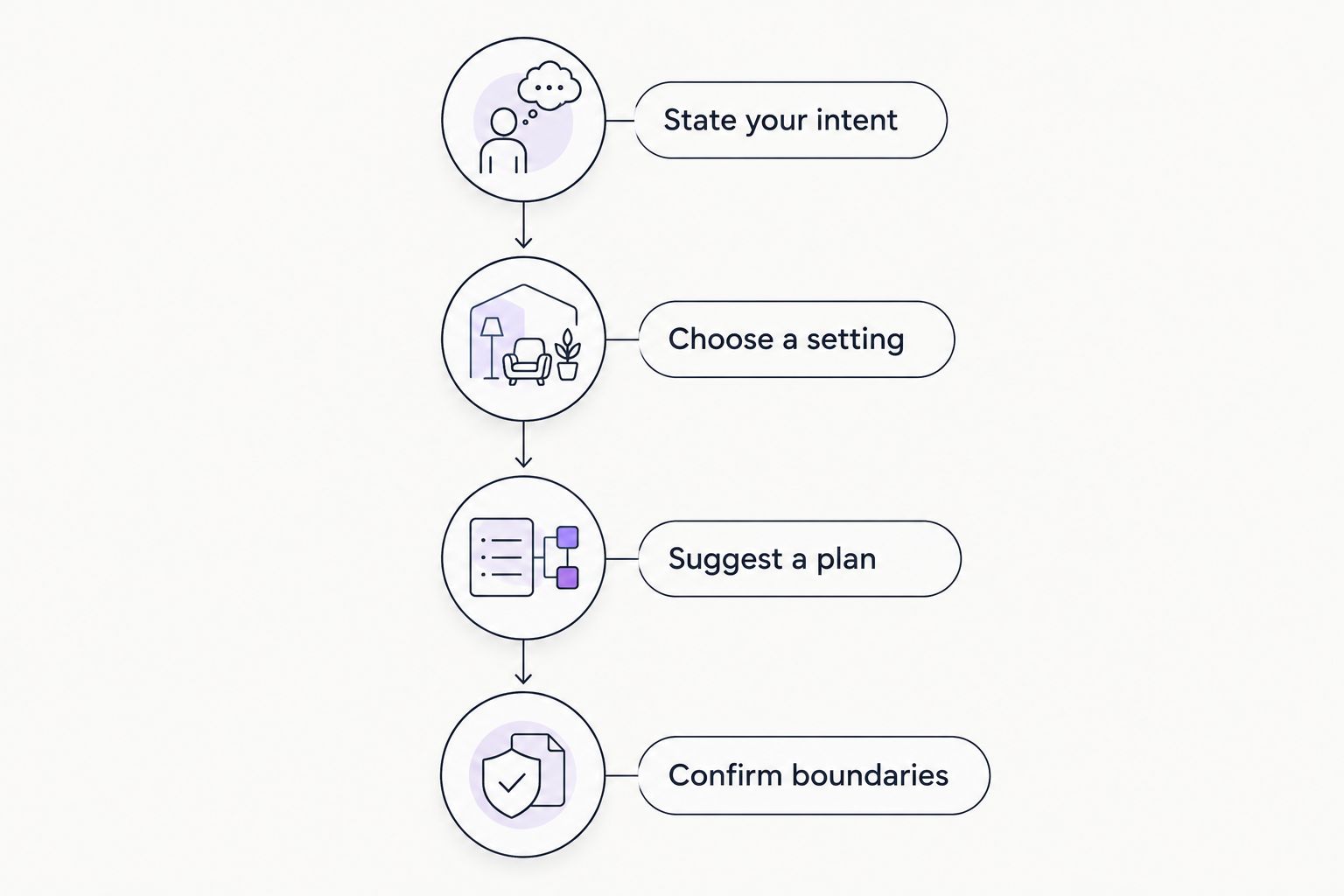
For your 2026 search, use a process that separates finding someone interesting from deciding to meet. A good invitation makes your intentions easier to understand, not harder to refuse.
State your intent
Say that you want platonic friendship. Add a relevant interest and whether you prefer online conversation, local activities, or both. You do not need to share personal identity details that you would rather keep private.
Choose a setting
Match the setting to your goal. Use a public group conversation for a gradual introduction, an organized event for activity-based contact, or a public venue for an agreed personal meetup.
Suggest a plan
Offer a specific activity without turning it into a demand. For an online introduction, a proposed 20-minute voice chat is one bounded option. For an offline meeting, agree on the venue and how you will recognize each other without exchanging unnecessary private information.
Confirm boundaries
Confirm that the plan is platonic and that both people understand the arrangement. Make declining easy. If someone repeatedly avoids your stated boundaries, stop trying to improve the invitation.
Keep the first plan small enough to evaluate on its own. You are agreeing to an activity, not promising an ongoing friendship. If it goes well, suggest another activity because you want to repeat the experience, not because you feel obliged.
Keep privacy separate from friendliness
Being friendly does not require immediate access to your home, workplace, private accounts, or daily routine. Share only what the conversation needs. A person who respects your boundaries does not need an elaborate justification for them.
For an initial offline meeting, choose a public place, arrange your own transport, and tell someone you trust about the plan. These are precautions, not a guarantee of safety. Use reporting and blocking options when appropriate, and leave an interaction that feels coercive.
If the proposed activity is 1 hour long, tell your trusted contact the expected finish time as well as the location. That is a suggested check-in arrangement, not an app feature or a promise that any venue is safe.
How these apps were ranked
The 2026 ranking prioritizes queer-community fit, the format of an introduction, and the path toward your preferred kind of friendship. Lex leads on queer-centered introductions; the remaining recommendations each serve a different use case.
This is a fit-based shortlist, not a claim about user totals, local activity levels, or guaranteed outcomes. Judge the specific conversation, event, or community before investing more time.
Which LGBTQ+ friendship app should you choose?
Start with Lex if you are undecided and want queer community first. Choose the nearby-plans option if meeting locally is your main objective, Meetup if you want an organized activity, or Discord if online conversation is the goal.
Pick one starting point for your 2026 search. Write a clear introduction and participate in something that genuinely interests you. Opening more apps does not resolve an unclear invitation.
FAQ
What's the best LGBTQ app to make friends in 2026?
Lex is the best default in this shortlist for queer-centered introductions. Choose another option when your main priority is a nearby plan, an organized activity, or an ongoing online community.
Is Pulsenow a good option for making LGBTQ+ friends?
Pulsenow fits the goal of meeting new friends nearby and organizing IRL plans. State your LGBTQ+ community preferences and platonic intentions clearly rather than assuming another person's identity or expectations.
Is Meetup an LGBTQ+-only app?
Meetup is not an LGBTQ+-only app. Evaluate the specific group's description, rules, and events to decide whether it matches the community you want.
Is Discord better for online friends or local friends?
Discord is the stronger fit here for ongoing online friendship. A shared server does not establish that members live nearby or want offline meetups.
How do I say I only want platonic friends?
State directly that you are looking for platonic friendship, then name an interest or activity. Repeat the boundary if necessary, and end the interaction if the other person will not respect it.
Should I share my address before meeting an app friend?
Keep your home address private for an initial meeting and agree on a public venue instead. Arrange your own transport and tell someone you trust about the plan.
One last thing
Before posting an introduction, write down an activity you would enjoy even if no friendship followed. That gives your invitation a real purpose. The first success is a clear, comfortable interaction—not a promise that you have found your new best friend.